Thursday, April 24, 2014
Final Reflection
I have always had an interest in sports because I grew up with participating in them and watching them, but I never critically thought about them. This class really showed all the different aspects of sports and what all goes into them in US society. From learning about the sport ethic, sports culture and how it varies; to the history of sports and globalization of sports; to how the media portrays sports depending on male and female athletes'; to disability sports and sex and gender in sports. All these topics that we talked about play a huge role in sports that I had not realized or though about before taking this class. So, in other words yes, my perception and understanding changed about sport. It change in a good way in that these are things to think about when it comes to sports and the certain situations that go on in them. I learned a lot more about sports that I didn't know beforehand. For instance, I didn't know some women athletes were okay with be exploited for their bodies if it made them more money, or that for the Olympics, women had to go through sex testing to makes sure they were indeed females that were competing. There are numerous new aspects of sport that I learned from this class. By learning these aspects will help me to look at sports more in-depth and think about them more critically. I do think that I will be able to use what I have learned from this class in my career in Psychology because it will help to understand certain situations regarding sports especially in regards to the sport ethic, social norms, and culture and society. I found this class really interesting, and fun to learn about. I would definitely recommend this class to my friends.

Thursday, April 10, 2014
Why the 'Mans Mans' Game is an insult to Men'
I believe in our society today being openly gay is more accepted and not looked down upon as much as it has in earlier years. However, in sports it has not reached a point yet where athletes can have the confidence to come out about being gay at anytime. Being gay, and being a current professional athlete still has its issues with society. In the articles, it explained numerous times that even if the teammates are accepting and supporting, it is the fans that are usually not. Which is why I do not think sport is a safe place for LGBT athletes. I think sport has made progress with slowly becoming more accepting to LGBT athletes, but I do not think it has fully become a safe and accepting place for them. Like Robbie Roger's expressed about how he waited to announce he was gay until he was no longer playing futbal any longer because he knew at that moment futbal as a sport was not going to accept it right away, but had faith that it was going to change overtime.
Sports are so cultural that it takes time just like racism did for culture to change and be accepting. This is why I think with more and more athletes coming out, and standing up not being discriminated against ( like in Training Rules) more of society will become acceptable to athletes being gay.
Sports are so cultural that it takes time just like racism did for culture to change and be accepting. This is why I think with more and more athletes coming out, and standing up not being discriminated against ( like in Training Rules) more of society will become acceptable to athletes being gay.
Friday, March 28, 2014
"Darwin's Athletes": Sports & Ethnicity
In African American culture sport is highly looked upon. Many people in this culture look at sport as a way out of the "projects", and as a great opportunity to achieve higher education along with their goals and dreams. Sport has a positive impact on the African American culture. Sport for them can keep them out of trouble, and give them class mobility. Sport plays a big role in their culture, and gives their future generations more hope and more opportunities.

However, in Hollywood films this culture tends to support more of the stereotype of African Americans athletes. Hollywood usually portrays these athletes as the under dogs who reach salvation, they tend to come from the rough part of town, and when they become successful they become flashy, and spend all their money. This all may have some truth to some situations, but it surely is not the case for all. In Hoop Dreams it does portray some of these aspects. William and Arthur did come from rough parts of towns, and had to over come difficult situations. However, both boys reached some part of their goal, and they ended up achieving a high education because of their sport.
 The Hollywood film, Coach Carter, is some what similar to Hoop Dreams in the aspect of education, and over coming adversity. The basketball team at Richmond High School was coached by Kent Carter. These boys were from a rough part of town, and struggled just to stay in school. The coach turned this group of boys around with the game of basketball. He showed them how to work hard, and to come together as a team to be successful. This coach also, pushed them to do well in school if they wanted to reach that next level of basketball; which William and Arthur had to do as well. The ending of this movie resulted in them losing the championship game. However, multiple players received scholarships to play in college, just like William and Arther had. Both movies are true stories ; the Hollywood film in just more dramatic and not in the form of a documentary.
I do not think that sport is damaging the African American race. I think the race it is portrayed poorly as any race is at times depending on the situation,but overall I think sport is bringing a lot of opportunity to them. Like I stated before I believe sport has a positive impact on this culture.

However, in Hollywood films this culture tends to support more of the stereotype of African Americans athletes. Hollywood usually portrays these athletes as the under dogs who reach salvation, they tend to come from the rough part of town, and when they become successful they become flashy, and spend all their money. This all may have some truth to some situations, but it surely is not the case for all. In Hoop Dreams it does portray some of these aspects. William and Arthur did come from rough parts of towns, and had to over come difficult situations. However, both boys reached some part of their goal, and they ended up achieving a high education because of their sport.
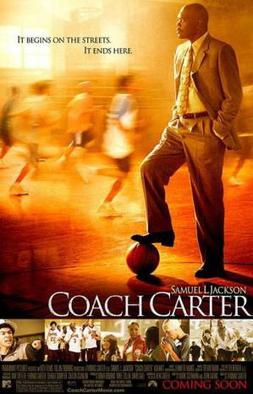 The Hollywood film, Coach Carter, is some what similar to Hoop Dreams in the aspect of education, and over coming adversity. The basketball team at Richmond High School was coached by Kent Carter. These boys were from a rough part of town, and struggled just to stay in school. The coach turned this group of boys around with the game of basketball. He showed them how to work hard, and to come together as a team to be successful. This coach also, pushed them to do well in school if they wanted to reach that next level of basketball; which William and Arthur had to do as well. The ending of this movie resulted in them losing the championship game. However, multiple players received scholarships to play in college, just like William and Arther had. Both movies are true stories ; the Hollywood film in just more dramatic and not in the form of a documentary.
 I do not think that sport is damaging the African American race. I think the race it is portrayed poorly as any race is at times depending on the situation,but overall I think sport is bringing a lot of opportunity to them. Like I stated before I believe sport has a positive impact on this culture.
Friday, March 14, 2014
Real Women
This Avis commercial with Gabby Reece is promoting Avis, the rental car system. The commercial starts off with her being viewed as a "professional" working woman. This shows the gender message that both men and women are capable of having professional careers. This commercial does a great job showing a woman athlete as a strong independent woman, that still looks feminine. The Avis commercial seems to go against the gender roles because Gabby Reece is seen as doing what a man would be doing. She is not participating in stereotypical women gender roles such as, being in the kitchen, or dealing with children. This commercial strictly shows her being a professional women with a career. Also, the gender relations this commercial contains is that men and women are similar in the work force. In the commercial she is dressed professionally, and drives a masculine car (Chevrolet Suburban). However, all this is contradicted at the end of the commercial. It shows Gabby arriving at the beach to teach yoga, and as she gets out she talks about how large the car is that she could change into a "tight little number"in it . This now puts the gender message back to females representing sex symbols to sell something, or to get men interested by using their sex appeal. This could send the wrong message to young girls by showing them that to be successful you have to use your sex appeal. Women can be powerful, and just as successful as men. However, in order to do so they must be attractive, and use their sex appeal. I don't think society is ever going to allow this to change.
References:
http://www.youtube.com/watch?v=NEgkgdQmug8
References:
http://www.youtube.com/watch?v=NEgkgdQmug8
Wednesday, February 19, 2014
"Interrogating inequalities in Sports Media: Examining gender/race representation in Sports Illustrated"
There seems to be a pattern of the covers in Sports Illustrated during the year of 2013. Over the year there was 102 magazine covers done, and with that their was no covers featured with an Asian female or male athletes. There were numerous covers done of white and African- American male athletes, but then again no females. The only covers that featured women were the swimsuit edition, and one with Kate Upton with two baseball players from the Braves.
However, in 2003 Yao Ming was featured on the cover of Sports Illustrated. The real question is why has it been 11 years since an Asian athlete has been featured on the cover? Some studies showed that for a long time there were not many Asian children involved in sports. Nevertheless, in 2001in larger cities such as Los Angeles, New York, San Francisco and Chicago, were where there was evidence that more Asian children participated in sports. More Asian children started participating in sports later on because they finally saw adults on Sports Center that looked like them.
So, is it just that there is not a significant amount of professional Asian athletes that participate in the "big 3 sports" , meaning baseball, basketball, or football that Sports Illustrated can feature in their cover? If this is the case, why can't Sports Illustrated widen their horizons on sports. Why can't they feature lacrosse, water polo, or even ice skating? If they featured ice skating they could definitely feature a professional Asian, male ice skater, but more then likely they won't because it doesn't fit the masculine appearance of the male athletes they feature in their magazine.
I think in order for Sports Illustrated to eliminate discrimination between races there needs to be an equal number of covers of each race. No matter the variation of sports at which the different races partake in they should be recognized to eliminate the favoritism of one race over the other. If they do not do this the Asian professional athletes will never get the same recognition as the other professional athletes do.
References:
http://sportsillustrated.cnn.com/magazine/photos/1305/si-covers-2013/3/
http://www.asian-nation.org/sports.shtml
However, in 2003 Yao Ming was featured on the cover of Sports Illustrated. The real question is why has it been 11 years since an Asian athlete has been featured on the cover? Some studies showed that for a long time there were not many Asian children involved in sports. Nevertheless, in 2001in larger cities such as Los Angeles, New York, San Francisco and Chicago, were where there was evidence that more Asian children participated in sports. More Asian children started participating in sports later on because they finally saw adults on Sports Center that looked like them.
So, is it just that there is not a significant amount of professional Asian athletes that participate in the "big 3 sports" , meaning baseball, basketball, or football that Sports Illustrated can feature in their cover? If this is the case, why can't Sports Illustrated widen their horizons on sports. Why can't they feature lacrosse, water polo, or even ice skating? If they featured ice skating they could definitely feature a professional Asian, male ice skater, but more then likely they won't because it doesn't fit the masculine appearance of the male athletes they feature in their magazine.
I think in order for Sports Illustrated to eliminate discrimination between races there needs to be an equal number of covers of each race. No matter the variation of sports at which the different races partake in they should be recognized to eliminate the favoritism of one race over the other. If they do not do this the Asian professional athletes will never get the same recognition as the other professional athletes do.
References:
http://sportsillustrated.cnn.com/magazine/photos/1305/si-covers-2013/3/
http://www.asian-nation.org/sports.shtml
Monday, February 17, 2014
Reflecting on the Shame of College Sports: Should NCAA Div 1 Basketball & Football players get paid?
The argument for whether Division one basketball and football players should get paid could go either way. Both of these sports popularity have grown larger throughout the years. They bring in millions of dollars a year through ticket sales, booster donations, and cable deals as one of the articles stated (NYT Sports Economy 3). These universities also pay millions of dollars for the best coach. For example Ohio State pays their football coach $4million a year (4). So the question is if these universities are making large amounts of money, and can afford to pay their coaches millions of dollars, why not pay the athletes? The athletes are the ones that cause the wins, and sacrifice their bodies to play. However, the counter argument for this is that college athletes are at the university to get an education as well, but most player's don't tend to think this way. Studies have shown the better the team is doing the more the student athlete's study less, they consume more alcohol, and party more. They are not focused on their academics, and by paying them could just cause this to worsen. I think that people tend to forget the real reason athletes go to college and play is to get an education, so that way if they don't make it to the pros they have something to fall back on. However, at the same time college sports brings school spirit amongst the students, and becomes a big part of college. So maybe the athletes should get rewarded by all that they do for the university. Like I said the argument can go either way; there are pros and cons on both sides.
Sunday, February 16, 2014
High School Sport
High School sports have become a big part of school and society. They originally emerged in the 1900's , and was modeled on the English Public School System. High School sports have great objectives for the athletes that are participating in them; these objectives are perseverance, team work, determination, and responsibility. However, these athletes are not meeting all these objectives. Responsibility, is the main objective that is not being met with school work. High Schools have tried to solve the issue of the student athletes lack of successful grades in classes by the eligibility rule. However, if these athletes are top athletes, and their teams are dong well that season teachers have the tendency to overlook their lack of effort and pass them, or give them the grade they need to be eligibly to compete.
The American society does not help this issue; in fact if worsens it. These athletes are pressured to be the best and perform at high levels constantly that is forces them to prioritize their sport first instead of education. When in reality, if something were to happen and their sports career ended they need their education to fall back on. There are many more problems the pressure of high school sports causes such as the use of performance- enhancing drugs, and social identity of a " student athlete". Although there is an imbalance in priorities, along with the other problems the pressure of the high school sports cause there is not one solution to solve these problems. In order for high school sports and the pressure involved with them it is the society that has got to change because the society expects the best. Which is why student athletes struggle with balancing their sport and education; they conform to the social identity of high school sports.
The American society does not help this issue; in fact if worsens it. These athletes are pressured to be the best and perform at high levels constantly that is forces them to prioritize their sport first instead of education. When in reality, if something were to happen and their sports career ended they need their education to fall back on. There are many more problems the pressure of high school sports causes such as the use of performance- enhancing drugs, and social identity of a " student athlete". Although there is an imbalance in priorities, along with the other problems the pressure of the high school sports cause there is not one solution to solve these problems. In order for high school sports and the pressure involved with them it is the society that has got to change because the society expects the best. Which is why student athletes struggle with balancing their sport and education; they conform to the social identity of high school sports.
Subscribe to:
Comments (Atom)